
Callable CDs Understanding the Banks Option to Redeem
A sophisticated look at Callable Certificates of Deposit detailing the risk return tradeoff and how the issuing bank can close the CD early

Guides in this section
Browse the guides that belong to this section.
Exploring the Nuances of Callable CDs

Callable certificates of deposit (CDs) are often misunderstood. While they can offer attractive interest rates, the inherent risks and complexities can cause confusion for potential investors. Many assume that a higher return equates to a safer or more lucrative investment, but this isn't always the case with callable CDs. The ability of the issuing bank to redeem the CD prior to maturity introduces additional factors that can significantly affect your overall return. Understanding these nuances is essential for making informed financial decisions.
Additionally, decisions surrounding callable CDs can become intricate due to their unique structures and potential consequences. Investors may not fully grasp the implications when a bank calls the CD, such as the reinvestment risk they will subsequently face. Many times, the straightforward advice found online might overlook these subtleties, leading individuals to miss critical aspects that could alter their investment strategy or financial landscape.
In a world where people are constantly seeking simple fixes to complex problems, this area of finance deserves a deeper exploration. Callable CDs may not be the best choice for everyone, depending on one's financial goals and market conditions. Understanding the risks versus the rewards is crucial to ensuring that your investment aligns with your financial objectives.
Why do many people overlook the risks associated with callable CDs?
One common misconception about callable CDs is that they are inherently safer than traditional CDs due to their higher interest rates. While these higher rates can be enticing, many investors don't recognize that the risk of early redemption by the issuing bank can severely impact their potential returns. When a bank calls a CD, it does so typically because interest rates have fallen, allowing them to refinance at a lower rate. This leaves the investor in a challenging position—searching for a new investment option at a potentially lower market rate.
Many people also underestimate the volatility of interest rates and how that volatility can influence a callable CD's value. If interest rates rise after the CD is purchased and the bank decides to redeem it early, the investor may find themselves compelled to reinvest their money at a lower rate than before. This situation illustrates a critical tradeoff; the potential for attractive returns is counterbalanced by the risk of early redemption that can nullify those returns.
Because of these risks, it's pivotal for investors to thoroughly analyze their individual situations and assess how callable CDs align with their financial goals. Often, holders of callable CDs find themselves wishing they had opted for a different investment strategy purely due to a lack of understanding regarding these risks.
What happens when a callable CD is redeemed early?
When a callable CD is redeemed early by the bank, the investor receives the principal amount back along with any accrued interest up until that point. However, the early redemption can disrupt the investor's plans for those funds, especially if they were counting on those returns over a longer period. Investors can find themselves scrambling to reinvest at an inopportune time, particularly if the market has shifted.
This scenario plays into a broader theme of financial planning. If an investor had anticipated using the funds from a long-term CD for a future purchase or for ongoing savings, early redemption can create holes in their plans. This unpredictability can be a significant drawback, particularly for those with set budgets or specific financial timing needs.
Moreover, the income generated from a callable CD may also be subject to immediate reinvestment risk, affecting overall portfolio returns. Investors may be forced to reinvest their funds at a lower yield if the prevailing interest environment has changed. Thus, it’s essential to consider the broader economic context and personal financial goals when investing in callable CDs.
Is it actually better to invest in traditional CDs rather than callable CDs?
Deciding whether to invest in traditional CDs versus callable CDs ultimately involves assessing your risk tolerance and financial objectives. Traditional CDs provide a fixed interest rate for a specified duration, offering the assurance that your investment will not be affected by the bank's decision to redeem early. This stability might appeal to those seeking predictable returns, especially in a fluctuating interest rate environment.
On the other hand, callable CDs might provide higher returns to compensate for their additional risk, which could be appealing under the right circumstances. If a potential investor is comfortable with the idea of the institution having the power to redeem the CD prematurely, and if they can navigate the reinvestment landscape adeptly, a callable CD can still play a valuable role in their portfolio.
It’s crucial to weigh these options carefully. Those who prioritize certainty and fixed income should lean toward traditional CDs. In contrast, more experienced and open-minded investors may find value in the potential upsides of callable CDs, understanding that such investments come with a caveat of increased risk.
What do most people misunderstand about callable CDs?
A prevalent misunderstanding about callable CDs centers around their perceived lack of flexibility. Many people think that the ability of the bank to call the CD at will means that they relinquish control over their investment entirely. In practice, while callable CDs do limit some investment continuity, they can also offer unique advantages that traditional CDs don’t. The confusion often arises from a lack of understanding of exactly when and why a bank might call a CD, leading to a perception that they are inherently bad investments.
Additionally, investors frequently overlook that callable CDs are often accompanied by higher yields to offset the associated risks. This higher yield can provide a greater return when the market conditions are favorable, and it's essential to view such an investment through a lens that acknowledges both opportunity and risk.
A deeper comprehension of terms and conditions is critical. Investors should inquire about the specific call provision terms of the CDs they consider. Understanding whether the callable option is limited to certain dates or if penalties apply can influence an investor's overall strategy significantly. Overall, educating oneself on these nuances can lead to smarter decision-making and potentially more profitable outcomes.
How does the bank’s timing affect callable CD performance?
The bank’s decision on when to call a CD is typically influenced by changes in the interest rate environment. When rates decrease, banks are incentivized to redeem higher-rate callable CDs so they can reissue new CDs at a lower interest rate. This timing can have profound implications on the investor's returns and must be viewed as a dynamic element influencing the overall investment strategy.
Many investors don’t realize that the timing of the call has a significant potential impact on their returns. If they were to invest in a callable CD at a point when market conditions are less favorable, the chances of the bank calling the CD can increase. Conversely, if interest rates are rising and money becomes more expensive for banks to borrow, the likelihood of an early redemption diminishes significantly. As such, it’s vital for investors to stay attuned not only to their market conditions but also to the macroeconomic factors influencing these rates.
Additionally, investors must take into account the potential opportunity cost of having their funds tied up in a callable CD versus a non-callable alternative. The missed potential returns from alternate investments post-redemption can compound the feeling of loss. Therefore, investors should ensure they are informed and consider market trends along with each callable CD’s terms to make the most of their investment.
How does callable CD investment affect long-term portfolio strategies?
Investing in callable CDs can present a unique set of implications for long-term portfolio strategies. While they may provide attractive returns in certain market conditions, their risks and redeemable nature have the potential to disrupt a well-laid investment plan. Investors should consider how the callable nature of these instruments fits into their overall financial goals—especially in terms of income generation and liquidity.
From a long-term perspective, investors may find that frequent changes to their investment strategies are necessary as callable CDs could require them to rethink their approach more often than traditional instruments would. The necessity to monitor rates and make adjustments accordingly can lead to increased portfolio management workloads. This dynamic nature may be appealing to some investors but overwhelming to others lacking the resources to adjust their plans frequently.
Moreover, the reinvestment of interest and principal from a callable CD, if redeemed early, can present both opportunities and risks. Investors should be prepared to reinvest returns at rates that may not favor their long-term growth aims. A thoughtful understanding of how callable CDs can impact an overall investment strategy can help a person determine how well these products fit within their financial objectives.
What are the hidden costs of callable CDs that investors might not recognize?
While callable CDs appear straightforward, they can come with hidden costs that investors may not immediately recognize. One significant factor is the opportunity cost associated with potentially missing out on better investment alternatives as a result of being locked into a callable CD with specified terms. If the bank redeems the CD early, investors are left searching for new opportunities in a possibly less favorable market.
Additionally, there may be fees associated with early redemption or particular call provisions that could impact the effective return from the investment. Such costs can eat into the profits expected from higher yield rates, changing the initial attractiveness of a callable CD. It’s crucial for investors to read the fine print and consult with financial advisors to fully understand these fees and how they can affect overall returns.
Understanding these hidden costs and navigating potential pitfalls can elevate an investor's decision-making process around callable CDs. Being aware of these nuances is vital within the broader framework of financial management, allowing for better-aligned investment strategies aimed towards achieving long-term financial goals.
| Aspect | Callable CDs | Traditional CDs |
|---|---|---|
| Interest Rate Potential | Higher yield but subject to early redemption | Fixed rate for locked duration |
| Redemption Timing | Bank can call at will; depends on market | No early withdrawal unless penalties incur |
| Reinvestment Risk | Higher if called early at unfavorable interest rates | Lower; rate remains locked for duration |
| Investment Control | Less control post-redemption | More control until maturity |
| Fee Structures | May include penalties or reduced returns if called | Fees and penalties for early withdrawal generally specified |
Diving Deeper into Callable CDs: Understanding Their Unique Advantages and Potential Pitfalls
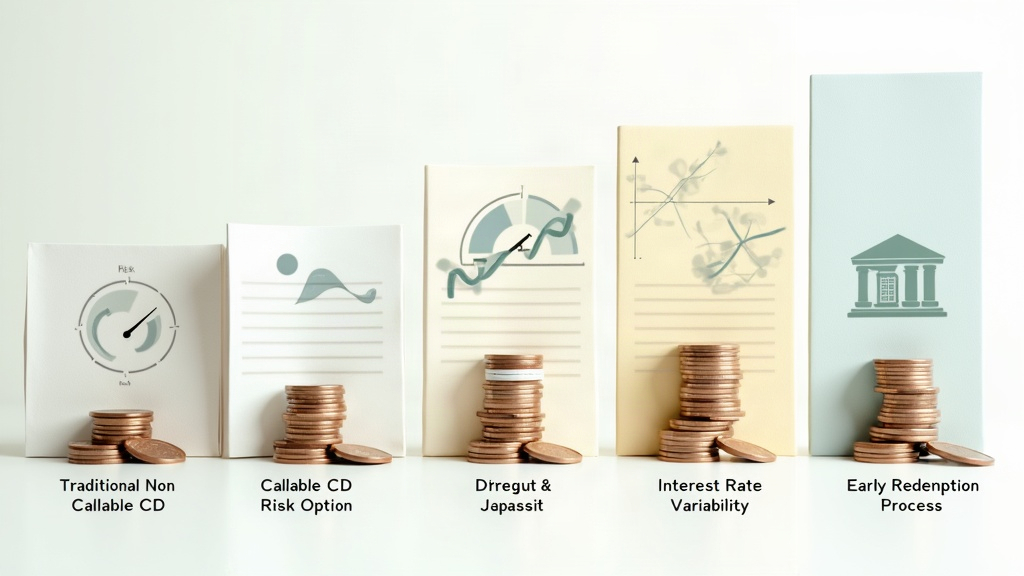
Callable Certificates of Deposit (CDs) represent a distinctive hybrid between traditional CDs and other investment vehicles, offering both opportunities and risks that can significantly affect your financial strategy. Their callable feature allows the issuing bank to redeem the CD before maturity, often when interest rates decline. This unique characteristic necessitates careful consideration when evaluating such products, as it introduces complexities not found in standard CDs.
Understanding the implications of callable CDs is crucial for any savvy investor. Unlike traditional CDs that remain locked for their term (generally providing assured interest), callable CDs may leave investors vulnerable to losing interest income if they are redeemed early. The complexity of these financial instruments means simple assessments are often inadequate for making informed decisions about your savings and investment strategies.
-
Understanding the Callable Feature
Callable CDs function uniquely by allowing the issuing bank the right to redeem the CD at specific intervals before maturity. This feature primarily serves the bank's interest, allowing them to adjust their liabilities based on prevailing interest rates.
Investors should be aware of when and why a bank might call a CD; typically, this occurs during a decline in interest rates. As a result, early redemption can lead to reinvestment risks, where investors face lower returns than anticipated.
-
Risk vs. Return Balance
Callable CDs often offer higher interest rates compared to traditional CDs to compensate for the increased risk of early redemption. This risk-reward dynamic is essential for investors to assess before committing their funds.
When weighing callable CDs, consider if the additional yield offsets the risk of the bank redeeming the CD, potentially leaving you with a lower return on your reinvested funds.
-
The Interest Rate Environment
The performance of callable CDs closely ties to the interest rate landscape. In a declining rate environment, the likelihood of early redemption increases, making them less attractive for long-term investors.
This video captures market trends relevant to callable CDs, illustrating how fluctuating rates influence decision-making for investors. Understanding this connection equips you to anticipate potential changes in your investments.
By staying informed about market dynamics, you can better strategize your approach to accepting callable CDs as part of your investment portfolio.
-
Comparison to Standard CDs
While standard CDs provide fixed interest rates and no possibility of premature redemption, callable CDs present an interesting alternative. The differences often come down to how each fits within your financial plan.
If you prefer guaranteed returns without the fear of being called away, standard CDs may serve you better. However, callable CDs could fit into a more aggressive investment strategy if you can tolerate added risk.
-
Investment Duration Considerations
The term length of a callable CD is crucial. Shorter-term callable CDs carry less risk of being called compared to their longer-term counterparts, as rates are more likely to fall over extended periods.
Investors should assess their liquidity needs and how long they can afford to have their money tied up, especially when considering the potential for early redemption.
-
Understanding the Call Schedule
Callable CDs have specific call dates outlined in their terms, which can help offset some uncertainty. Familiarizing yourself with this schedule allows for better planning regarding cash flow and reinvestment strategies.
This visual explanation summarizes callable CD terms and the importance of understanding when a bank can redeem them. The timeline outlined here highlights the implications for your cash flow.
By grasping these concepts, you empower yourself with the knowledge to engage confidently with these financial products and create a more tailored investment strategy.
-
Bank Reliability and Creditworthiness
The issuing bank’s credit rating should factor into your decision about callable CDs. A bank with a strong financial standing is less likely to face issues in maintaining interest payments, although that doesn’t entirely eliminate the risk of a callable feature.
Researching the bank’s history and financial statements can provide additional confidence when selecting a callable CD.
-
Investor Experience Level
Your experience with investment products significantly impacts how you perceive callable CDs. More seasoned investors may view the risk-reward ratio favorably, while novices might prefer the familiarity of traditional options.
Consider your comfort level with investment complexity and your ability to weather fluctuations when deciding whether to engage with callable CDs.
| Criteria | Callable CDs | Standard CDs |
|---|---|---|
| Interest Rates | Generally higher | Fixed rates |
| Redemption Risk | Bank can redeem early | No early redemption |
| Market Sensitivity | More sensitive to interest rate changes | Not sensitive |
| Investment Strategy | Requires careful planning | Simpler investment |
| Ideal For | Aggressive investors | Conservative investors |
Mastering Callable CDs for Financial Flexibility

Navigating the world of Callable Certificates of Deposit (CDs) can often feel like untangling a complex web of choices. Many people find themselves unsure of how to fully utilize these banking instruments, particularly when it comes to understanding the risk-return tradeoffs and the nuances of the bank's option to redeem the CD early. This uncertainty can stymie decision-making, leaving potential investors stuck on the sidelines, unsure how to balance yield and flexibility.
Moreover, misinterpretations about Callable CDs can lead to poor investment decisions. For instance, some may mistakenly believe that all CDs are risk-free or might not understand the implications of the bank having the right to call the CD before maturity. Correctly executing an investment in Callable CDs requires a nuanced understanding of how they function and the potential outcomes associated with them. This section will walk you through actionable steps for making informed decisions with Callable CDs, focusing on how to mitigate risks while maximizing your investment potential.
Understand the Basics of Callable CDs
Before diving into the intricacies, it's crucial to grasp the foundational elements of Callable CDs. These are time deposits that offer fixed interest rates, but with the caveat that the issuing bank can choose to redeem them before the maturity date. This can happen if market interest rates drop, compelling your bank to "call" these CDs to reinvest at a lower rate. The core reason for purchasing a Callable CD is often the appealing initial interest rate—typically higher than standard CDs. However, understanding this tradeoff is vital as it relates directly to the bank's right to call the CD.
As an example, consider a Callable CD with a rate of 3% that is callable after three years. If market rates fall to 2% during that period, the bank may redeem your CD, sidelining your expected higher yield. It's essential to weigh this feature carefully against your own financial outlook and liquidity needs.
Analyze Your Investment Goals
Your investment objectives should guide your decision on whether to invest in Callable CDs. Are you looking for short-term gains or long-term security? Callable CDs may be a fit for conservative investors seeking higher returns while understanding that their money could be tied up for several years. Yet, if your goal is liquidity or short-term cash needs, the callable nature of these CDs introduces risk that may not align with your financial strategy.
For example, if you're saving for a down payment on a home within the next three years, committing to a Callable CD could expose you to unexpected redemption risks. Conversely, if you're set on long-term investment, these CDs may provide a comfortable yield compared to other fixed-income options.
Evaluate the Institutions Offering Callable CDs
Not all banks are created equal when it comes to issuing Callable CDs. Each institution may have different terms regarding the call feature, interest rates, and early redemption penalties. It's essential to evaluate these offerings carefully. Look for banks that are transparent about these terms and compare multiple institutions to ensure you find a product that aligns with your needs.
Additionally, consider the bank's reputation and stability. Investing in far-reaching online institutions versus well-established local banks can have implications for customer support and service, particularly if you have questions about the Callable CD's terms after purchase. Conducting thorough research can protect you from unforeseen pitfalls and enhance your financial experience.
Understand the Market Conditions
Market conditions play a crucial role in the decision-making process for Callable CDs. Interest rates fluctuate based on economic trends and fiscal policies. When rates are rising, banks have a greater incentive to call higher-interest CDs to reinvest at the new rates. Therefore, being informed about market indicators can help you gauge when to invest in Callable CDs.
If you're aware that interest rates are likely to rise, it might be prudent to prioritize other savings options over Callable CDs, which could be redeemed prematurely. Conversely, if the general outlook suggests declining rates, Callable CDs might be a suitable short-term investment with relatively safe returns.
Plan for Market Reactions
Once you've purchased a Callable CD, it's wise to continue reassessing your investment strategy based on market developments. Following economic trends can inform you about potential bank actions concerning your CD. A sudden rise in interest rates would likely prompt the bank to call your CD, leading to cash reallocation sooner than you anticipated.
Adapting your portfolio in response to economic changes is essential for long-term wealth growth. If you find that your Callable CD has been called, determine your next steps—whether to reinvest in a new CD, consider other fixed-income options, or risk overexposing your investments to lower yields.
Maximize Your Returns with an Exit Strategy
While Callable CDs provide a certain level of return, having a well-defined exit strategy can boost your overall financial effectiveness. Factors such as market interest rates and personal financial situations can impact your decision to stay invested in a Callable CD or make a move to liquidate your holdings. Preparing for various scenarios will allow you to make smarter decisions about your cash.
For instance, if you are approaching the end of a CD's term and interest rates are favorable, consider rolling over your investment in a different type of CD. A proactive approach to managing Callable CDs can lead to enhanced financial flexibility and helps prevent being locked into less-than-ideal situations dictated by market shifts.
This video provides a concise overview of Callable CDs, highlighting their benefits and disadvantages. It connects well to the topic by illustrating the decision points involved and framing the discussion around how to strategically approach investing in these financial products. Viewers can deepen their understanding of the dynamics at play and decide if Callable CDs are right for their investment strategy.
| Factor | Callable CD | Standard CD |
|---|---|---|
| Interest Rate | Higher initial rate, but risks of being called | Typically lower rate, no early redemption risk |
| Liquidity | Lower; can be called before maturity | Higher; set terms with guaranteed returns |
| Risk | Exposure to market interest fluctuations | More stability; no call risk |
| Investment Horizon | May need to adjust based on when called | Fixed schedule, easier for planning |
Watch Out for Costly Errors
- Underestimating the impact of market conditions on callable features.
- Ignoring the penalties associated with early redemption.
- Failing to align investment strategy with financial needs.
- Overlooking available interest rate comparisons across institutions.
- Not having a clear exit strategy or reallocation plan.
Assessing Your Success with Callable CDs
The path to mastering Callable CDs doesn’t end with the initial purchase; ongoing assessment is crucial for achieving your financial goals. Regularly evaluate your returns against your investment expectations and consider if the Callable CD still aligns with your overall financial strategy. Are your needs evolving? Particularly challenging market conditions may necessitate a revision of your tactics.
Ultimately, success in managing your Callable CDs is about balance. Strive for a blend of stable returns and liquidity, and remain adjusted to changing market dynamics. Keeping a realistic perspective on what these investments can deliver, both in the short and long term, will empower you to make informed decisions as you navigate your financial future.