
Equipment Financing and Leasing Solutions
Guides to securing loans or leases specifically for purchasing or renting necessary business equipment and machinery

Guides in this section
Browse the guides that belong to this section.
Deciding How to Finance or Lease Essential Business Equipment: What Every Owner Needs to Know

Launching or growing a business often hinges on getting the right equipment—whether it’s industrial machinery, restaurant appliances, or the latest office tech. The catch? These investments can quickly tie up cash that might be needed elsewhere. How do successful business owners navigate this crossroads between immediate needs and smart financial stewardship? The answer lies in understanding the intricate world of equipment financing and leasing solutions.
Today’s business landscape is defined by rapid technological change, shifting market demands, and tighter cash flows. More than ever, entrepreneurs must weigh the benefits and risks of purchasing versus leasing, and grasp the subtleties of terms that impact their month-to-month operations and long-term growth. It’s not just about getting access to equipment; it’s about making decisions that align with broader financial goals, help preserve working capital, and leave room for agility in a changing market.
Several key insights set equipment financing and leasing apart from other forms of business borrowing. First, these options can make costly assets immediately affordable, but common missteps—like underestimating total costs or overcommitting to long-term leases—can cause financial strain. Second, lease terms, interest rates, tax implications, and buyout strategies all present nuanced tradeoffs that directly affect profitability and cash management. Third, technological obsolescence and maintenance responsibilities require owners to think ahead: Is it better for your business to own and maintain, or retain flexibility with an upgrade-friendly lease?
The impact on day-to-day operations is substantial. For many, choosing the right financing structure can mean the difference between smooth expansion and cash flow headaches. Imagine a growing manufacturer: by leveraging equipment financing, they reserve cash for payroll, marketing, or emergencies, while still scaling production. Or consider a tech firm opting for a short-term lease so they can upgrade systems annually without locking up scarce capital—each choice is strategic, and the stakes are high. Effective decisions here also ripple into other areas, from tax planning and overall business cash management to the broader arc of borrowing and lending strategy.
Looking ahead, the world of equipment financing and leasing is only getting more complex—and more critical. With innovative lenders, evolving accounting standards, and constantly changing tax environments, business owners who take the time to understand these solutions will position themselves for greater resilience and opportunity. Mastering this topic is not just about accessing machinery or vehicles; it’s about building a foundation for smarter, more confident financial growth in every season of your business journey.
Exploring Effective Equipment Financing and Leasing Strategies
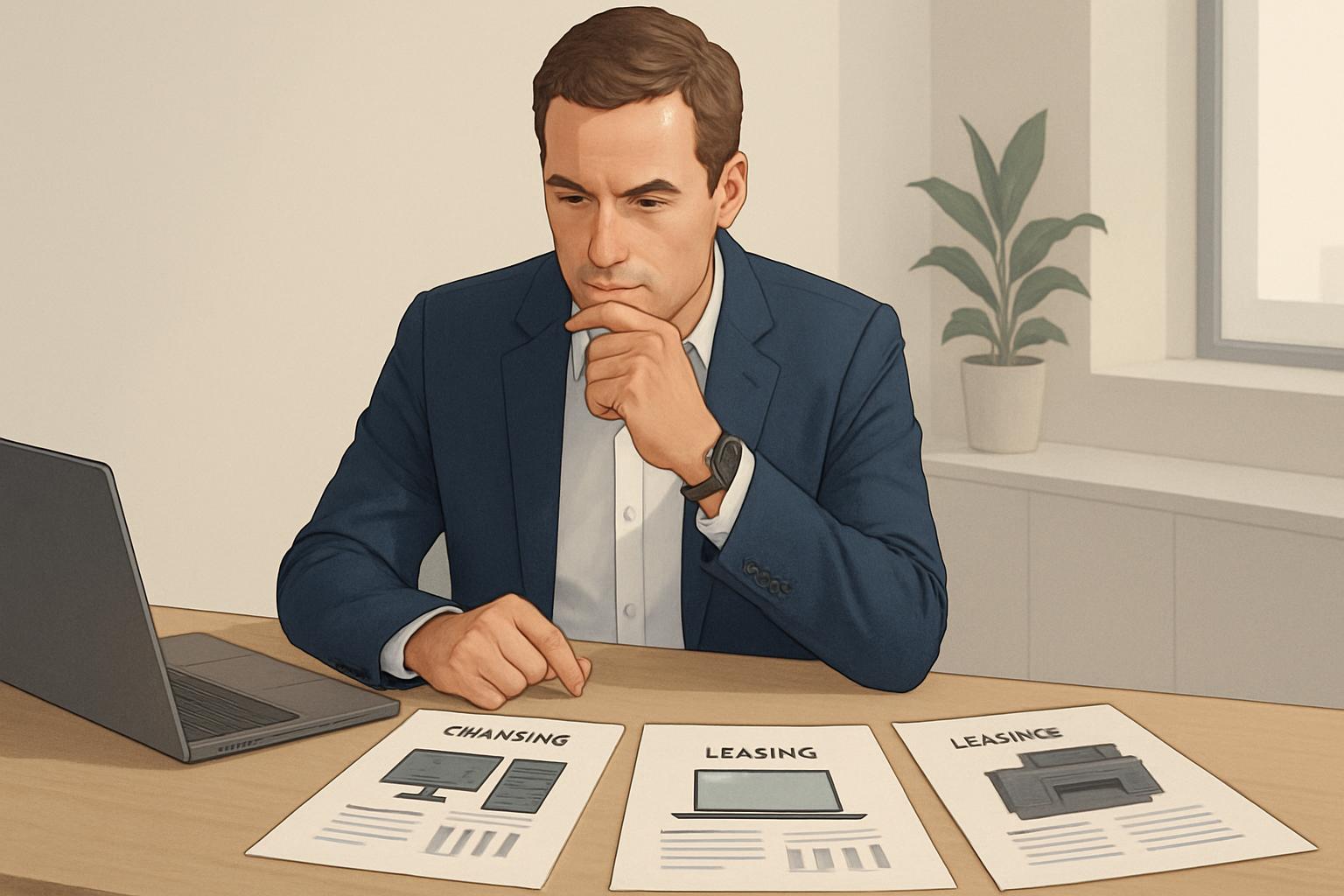
Securing the right equipment financing and leasing solutions is a pivotal challenge for any business seeking to grow and innovate while maintaining a healthy cash flow. With the array of choices available, making the right decision goes beyond just selecting a low-interest option—it involves aligning with your business’s strategic goals. Missteps can lead to financial strain or operational inefficiencies, making it essential to explore nuanced, strategic approaches to equipment financing.
-
Understand Your Cash Flow Needs
Before diving into financing options, it's crucial to thoroughly assess your cash flow requirements. This helps pinpoint exactly what you can afford to allocate towards equipment leasing or financing without jeopardizing other critical operations. A well-planned approach ensures you select a solution that complements—not competes with—your cash flow strategy.
Consider creating detailed cash flow forecasts to explore various scenarios and understand potential impacts of new financial obligations. This proactive measure reduces financial risks and enhances decision-making accuracy.
-
Evaluate Total Cost of Ownership
Beyond the initial cost, consider factors like maintenance, insurance, and potential resale value. Understanding these aspects lets you gauge the long-term implications of your financing or leasing choice, ensuring sustained value and performance from your investment.
This broader view often highlights unexpected costs that can significantly impact financial outcomes, especially in high-wear industries.
-
Examine Flexibility of Terms
The flexibility of lease or loan terms can make a substantial difference in overall value. Investigate options that allow adjustments in payment schedules or early payoff without penalties. This adaptability can be crucial if your business environment changes unexpectedly.
Avoid locking in rigid terms that may limit financial agility during fluctuating economic conditions.
-
Assess Residual Value Clauses
Leases often include residual value clauses that impact end-of-term decisions—like purchasing the equipment. Understanding these clauses helps you plan long-term decisions about the equipment's utility and potential resale.
- Ensure the buyout process is clear and fair.
- Consider how the residual value aligns with projected equipment depreciation.
-
Utilize Tax Benefits Strategically
Leasing and financing both offer unique tax benefits which, if effectively leveraged, can enhance cash flow and reduce overall tax liability. Exploring these benefits with a tax advisor can reveal strategies that align financing with broader financial goals.
Understanding specific provisions like Section 179 can maximize these advantages.
-
Review Vendor Relationships
Your relationship with equipment vendors can influence financing options. Some vendors offer in-house financing that could be more beneficial due to familiarity with the equipment. Evaluate these relationships critically, including any support and service packages bundled with financing.
Close vendor partnerships might also provide leverage in negotiating better terms or service agreements.
-
Measure Operational Impact
Financing decisions can significantly affect operational capabilities. Ensure that the equipment financed aligns with your operational demands and contributes positively to productivity rather than merely adding financial pressure.
A comprehensive cost-benefit analysis can reveal hidden impacts on operations, offering clearer insight into the potential return on investment.
-
Stay Informed on Market Trends
The equipment financing landscape evolves with market conditions, such as interest rate shifts and technological advancements. Staying informed positions you to capitalize on optimal financing conditions and technological improvements.
- Regularly review industry publications and reports.
- Engage with financial advisors specializing in equipment financing.
| Consideration | Impact | Importance |
|---|---|---|
| Cash Flow Needs | Influences repayment plans and affordability | High |
| Total Cost of Ownership | Affects long-term financial health | Medium |
| Term Flexibility | Provides financial agility | High |
| Residual Value Clauses | Impacts end-of-term decisions | Medium |
| Tax Benefits | Optimizes tax obligations | Medium |
| Vendor Relationships | Affects financing options and terms | High |
| Operational Impact | Ensures alignment with productivity goals | High |
| Market Trends | Offers opportunities for advantageous financing | Medium |
The embedded video provides a comprehensive breakdown of strategic decision-making when considering equipment financing. By visually presenting complex concepts, it helps clarify the intricate dynamics at play, thereby enhancing your understanding of effective approaches. This resource is invaluable for gaining a clearer perspective on aligning financing solutions with your organizational needs.
Unlocking the Complexities of Equipment Financing and Leasing

When it comes to acquiring necessary business equipment, many entrepreneurs find themselves navigating a labyrinth of financial decisions. Equipment financing and leasing are often confused, yet they offer distinct advantages and challenges that aren't immediately clear. What's more, the decisions made in this area can have long-lasting impacts on a business's financial health, operational flexibility, and growth potential.
For those exploring these options, a multitude of factors comes into play, making simple advice insufficient. The choice between financing and leasing isn't merely about costs; it involves understanding taxes, contractual obligations, and how each decision meshes with long-term business strategies. Missteps here can lead to unforeseen expenses or missed opportunities that could have been avoided with deeper insights.
In this FAQ section, we aim to resolve prevalent uncertainties, clarify complex decisions, and address the nuanced trade-offs involved in equipment financing and leasing. By examining real-world scenarios and common misunderstandings, we'll provide a clear pathway to informed decision-making.
Why do many people misunderstand the difference between equipment financing and leasing?
Many people equate equipment financing with leasing, assuming they are interchangeable due to their role in equipment acquisition. However, understanding the key differences is crucial. Equipment financing involves taking a loan to purchase equipment outright, giving you ownership—complete with its depreciative value—right from the start. Leasing, conversely, is akin to renting; you pay to use the equipment without obtaining ownership, which changes your balance sheet and tax dynamics significantly.
The misunderstanding often arises from similar financial structures, like monthly payments. Yet, the financial outcomes diverge: financing offers ownership, allowing depreciation and potential resale value claims, while leasing offers flexibility and possibly less maintenance hassle, as the lessor remains responsible for the equipment. In practice, the decision pivots on a variety of factors like cash flow, tax strategy, and operational timelines, complicating straightforward comparisons.
These intricacies can lead to strategic oversights, like not factoring in how the asset's obsolescence aligns with whether you buy or lease. Misunderstandings in these areas underscore the importance of forward-looking financial advice, often necessitating consultation with financial advisors who understand cash flow models, tax implications, and the lifecycle of the equipment relevant to your industry.
What happens when companies simply choose the cheaper option?
Choosing the cheaper option at face value might appear sensible, but it can mask deeper costs and strategic inefficiencies. Companies often make the mistake of assessing equipment financing or leasing costs without considering their impact on long-term financial strategies. A lower monthly lease fee might seem attractive, but it could result in higher cumulative expenses over the equipment’s life or restrict operational adaptability.
Opting for cheaper alternatives can also gloss over critical contractual terms and hidden fees, like penalties for exceeding usage limits or end-of-lease costs for wear and tear. These peripheral costs can ensnare businesses into less favorable positions, limiting future financial maneuvering or forcing premature upgrades.
Thus, it behooves decision-makers to delve beyond surface-level cost comparisons, analyzing total ownership costs against the periodic leasing expenses. It's about aligning financial choices with business growth forecasts—a strategically sound yet often underexplored angle that should replace mere cost analysis in financial deliberations.
Is it actually better to own equipment rather than lease it?
Ownership of equipment isn't universally preferable; its desirability depends on diverse factors like technological obsolescence, financial forecasts, and maintenance capabilities. Buying equipment outright allows businesses to capitalize on depreciation and potentially boosts the balance sheet's value. This strategy is often favored for equipment with long utility and slower depreciation rates.
Leasing, by contrast, provides flexibility especially valuable for rapidly evolving industries, like technology where equipment can quickly become outdated. It offers businesses a chance to upgrade consistently without the burden of obsolescent assets. Furthermore, it aids cash flow as no large initial capital outlay is required.
Ultimately, whether to own or lease should reflect your specific industry dynamics and strategic financial context. A careful cost versus benefit evaluation, including how long the equipment will provide a competitive advantage before needing replacement, will guide whether ownership or leasing delivers optimal value over the equipment's lifecycle.
How does leasing affect long-term financial outcomes for businesses?
Leasing can significantly adjust a business's long-term financial landscape. Its primary effect is on cash flow, freeing up capital that would otherwise be tied up in equipment ownership. This liquidity can be redirected into growth and innovation activities, providing a competitive advantage through agile capital allocation.
Additionally, leasing often translates to operational rather than capital expenses, simplifying accounting and taxation. However, long-term leasing could lead to a cycle of continuous payments without acquiring any assets, which might affect equity leverage if substantial assets are not being built elsewhere in the business.
For many businesses, the biggest impact is found in the flexibility and lower risk of obsolescence. If handled wisely, leasing can safeguard a company from locking into ownership of rapidly depreciating or soon-to-be outdated technology, ensuring operational efficiency without sacrificing adaptability.
What do most people misunderstand about the risks inherent in financing equipment?
Many perceive the primary risk of equipment financing as financial strain from repayment commitments. While ownership does indeed incur the responsibility of loan repayment, this viewpoint overlooks substantial risks like the equipment's potential obsolescence and maintenance liabilities.
A frequently overlooked aspect is the implication on cash reserves which can inhibit a company’s response to market opportunities or downturns. Financing ties up funds in depreciating assets, impacting liquidity and reservoir for unforeseen expenses or strategic moves.
Moreover, the real long-term risk is competitive stasis; locked into ownership of soon-outdated machinery, companies may find themselves behind innovation curves. Understanding these financing risks requires a forward-thinking approach to how these assets contribute to sustainable competitive operations and financial structures.
How do taxes influence the decision between financing and leasing?
Tax implications significantly sway the decision-making process between financing and leasing, often offering substantial if sometimes overlooked advantages. Equipment financing generally permits depreciation deductions, a benefit to owning assets that can directly reduce taxable income over time.
In contrast, leasing payments are typically considered operational expenses, offering complete deductibility in the tax year when incurred. This provides immediate tax relief and impacts financial statement perceptions by not weighing down the balance sheet with depreciating assets.
Strategizing these tax implications wisely can restructure a company's financial representation and benefits, aligning with both short-term financial efficiency and long-term fiscal objectives. Therefore, consulting with tax advisors is recommended, enabling alignment with overarching business fiscal strategies and navigating evolving tax regulations efficiently.
How can economic downturns impact the decision between leasing and financing equipment?
An economic downturn can dramatically shift the equation between leasing and financing. During such times, cash flow becomes a priority, tilting lean towards leasing due to its lower upfront capital requirement, conserving cash for essential operations or to weather economic uncertainties.
However, financing could present opportunities for businesses with stable cash reserves. Economic slumps often bring about favorable interest rates, allowing businesses to capitalize on these advantageous terms to own assets that could appreciate or become strategically valuable post-recovery.
In periods of economic instability, strategic nimbleness becomes crucial. Analyzing the broader economic landscape alongside company-specific dynamics aids in developing resilient approaches, designing financial strategies that buffer against uncertainty while leveraging economic fluctuations to a business’s advantage.
Can leasing equipment hinder a company’s strategic growth, and if so, how?
While leasing can be a powerful tool for managing cash flow, it does introduce certain hindrances to strategic growth. One major constraint is the ongoing payment commitment without asset accumulation, which influences balance sheet perceptions and lending relationships, potentially affecting company valuations.
This can somewhat limit your leverage for additional funding, as banks generally view asset ownership favorably when analyzing creditworthiness. A significant lease portfolio might be seen as a liability rather than a growth investment, impacting the ability to secure future financing.
Nevertheless, if well-managed, leasing can support strategic expansion through capital conservation, letting businesses redirect funds towards initiatives fueling substantial growth. The key is balance—strategically integrating leases into a broader financial strategy that respects both asset value creation and business agility.
How does an equipment’s lifecycle impact the choice between leasing and financing?
The expected lifecycle of equipment is a pivotal factor in the leasing versus financing decision. Long-term utility often justifies financing; assets that do not quickly become obsolete offer return on investment (ROI) through extended use and potential resale value.
Conversely, the short lifecycle favors leasing. Rapid technological advancements or industry shifts can depreciate equipment value swiftly, making ownership economically inefficient. Leasing provides access to up-to-date technology without heavy financial commitments, enabling businesses to adapt seamlessly to evolving needs.
Considering these lifecycle insights, decision-makers should align their equipment acquisition strategies with their business’s operational forecasts and competitive environments. This proactive planning can protect against obsolescence while maximizing the value and utility each piece of equipment delivers during its active life.
| Consideration | Financing | Leasing |
|---|---|---|
| Cash Flow Impact | High upfront cost, depreciating over time | Lower immediate cost, higher total periodic payment |
| Tax Benefits | Depreciation deductions over time | Payments as operational expenses, immediate tax deduction |
| Asset Ownership | Full ownership, impact on asset columns | No ownership, potentially more flexible upgrade paths |
| Long-term Strategic Impact | Asset growth, financial inflexibility | Operational flexibility, limited asset accumulation |
| Reaction to Economic Changes | Benefits from low-interest loans in downturns | Conserves cash, adaptable to economic shifts |
This video further elucidates the nuances between leasing and financing equipment, spotlighting how each can be strategically leveraged. By identifying when leasing offers strategic flexibility and when ownership enhances competitive positioning, it underscores the critical balance between short-term operational objectives and long-term financial health.
Understanding these dynamics is crucial, as it equips you with the know-how to make choices that facilitate growth while mitigating financial pitfalls. This insight prepares businesses to anticipate market shifts and align their financial strategies with evolving industry landscapes.
Navigating the Equipment Financing and Leasing Process: From Assessment to Agreement

Securing equipment financing or leasing for your business often looks far simpler in theory than in practice. Many entrepreneurs and business owners hit a wall—not due to a lack of options, but because the path to the right financing is layered with complexities. Newer businesses, in particular, may feel overwhelmed by industry jargon, uncertain credit requirements, and unfamiliarity with lease structures that affect not only their immediate cash flow but also their long-term financial health.
The stakes are high: make the wrong move, and you could end up with costlier terms, unsuitable machinery, or a rigid contract that throttles growth. Misinformation, impulsive decisions, or fear of rejection can all freeze forward progress. In the world of business financing, “winging it” is a luxury few can afford. Executing this process correctly isn’t just about ticking boxes—it’s about strategically positioning your business, anticipating lender expectations, and using financing as a lever for sustainable expansion.
1. Pinpoint Your Equipment Needs and Usage Patterns
Start by defining exactly what type of equipment your business needs—not in broad strokes, but with precision. Are you replacing obsolete machinery, scaling operations, or launching a new offering? Specifications like model, age, required features, and estimated useful life all shape which financing options will fit. If you overestimate, you could end up paying for excess capability you don’t need; underestimate, and you’ll face operational bottlenecks or need to renegotiate your agreement.
This step requires a cold, honest look at your current workflows and future plans. Consider your cash flow stability, seasonality, and whether technology upgrades are likely in the near term. For example, high-tech equipment prone to rapid obsolescence might be better suited to short-term leasing, while heavy machinery with a decade-long lifespan could justify ownership through financing. The clarity gained here will drive better terms—and fewer regrets.
2. Assess the Financial Health of Your Business
Before you seek out any lender or leasing provider, scrutinize your business finances the way an underwriter would. Lenders examine cash flow, profitability, existing debt, and credit history. Performing your own pre-flight check allows you to spot potential red flags, like debt ratios that are too high or inconsistent revenue streams, which can sabotage your application.
This is also the right moment to gather documentation—financial statements, tax returns, business plans, and asset inventories. A strong paper trail speeds up approvals and strengthens your negotiating position. If you uncover weaknesses, you may benefit from temporarily focusing on improving your credit health before applying, or considering a lease structure designed for newer businesses with lighter credit profiles.
3. Weigh Financing Versus Leasing: Strategic Fit Matters
The choice between equipment loans and equipment leases is anything but trivial. Each offers distinct upsides and tradeoffs. Purchase financing can lead to outright ownership, potential depreciation benefits, and long-term cost savings if you plan to use equipment for its full lifespan. However, these loans often demand a higher up-front commitment and stricter credit requirements.
Leasing, on the other hand, offers flexibility: smaller monthly payments, easier upgrades, and typically fewer up-front costs. This path is especially appealing for equipment with fast-changing technology. The downside? You may pay more over time without ever enhancing your balance sheet with the asset. Run real numbers for both paths—not just on paper, but in the context of your business goals and cash flow—and don’t let short-term pressures overshadow your long-term growth strategy.
4. Identify and Vet Financing Sources With a Sharp Eye
Equipment financing and leasing is a competitive field, and sources range from traditional banks to online lenders, specialty financiers, and even equipment vendors themselves. Don’t default to the first offer or the assumed “easy” path—the right partner can make a difference to approval odds, costs, and flexibility.
Explore the offerings, but also scrutinize the “fine print.” Some lenders specialize in certain asset classes or business types. Pay attention to interest rates, total repayment projections, hidden fees, and end-of-lease terms. Direct vendor financing can look attractive but may carry higher effective rates or limited negotiation options. Approach this step much like you would when exploring options in other business borrowing or loan decisions: with patience, skepticism, and a long-term mindset.
5. Structure Terms for Flexibility and Protection
Once you’ve selected a lender or lessor, the negotiation really begins. Carefully structure payment schedules, end-of-term options, prepayment penalties, and upgrade clauses so they align with your business’s revenue cycles and growth plans. Resist the urge to chase the absolute lowest monthly payment—it may be offset by balloon payments or unfavorable buyout clauses down the line.
Consider negotiating seasonal payment plans if your business has fluctuating revenue, or requesting early upgrade options for technology-intensive equipment. Transparency is your friend; don’t shy away from asking direct questions about what happens in the event of equipment failure, insurance requirements, or early termination. Taking time here can reduce costly headaches down the road.
6. Finalize Agreements and Build for Future Borrowing
Read every line of the agreement—twice. Scrutinize insurance obligations, maintenance responsibilities, late payment penalties, and what’s expected if you seek to terminate early. This is your shot to clarify anything ambiguous, and to ensure you’re not taking on unresolved risks.
Closing the deal is also the moment to build relationships with your lender or lessor. Timely and professional communication can earn you goodwill, which matters when you return for future financing needs or ask for contract modifications. Maintain organized records of your agreements and payments; a strong track record here boosts your future borrowing power and places your business on sturdier ground when new opportunities arise.
The TikTok video above walks through an actual small business owner's decision-making process for acquiring equipment—showing the messy, real-world tradeoffs between leasing and financing. Its candid look at costs, flexibility, and business needs complements the step-by-step approach outlined here, offering a relatable window into why these decisions matter and how tailoring your strategy can keep your financials resilient.
| Approach | Main Advantages | Primary Drawbacks | Best For |
|---|---|---|---|
| Equipment Financing (Loan) | Asset ownership, potential tax benefits, predictable long-term costs | Higher up-front commitment, larger monthly payments, stricter credit requirements | Businesses seeking long-term equipment use and balance sheet growth |
| Operating Lease | Lower monthly payments, upgrade flexibility, minimal end-of-term risk | No ownership, cumulative cost can exceed value, less equity accrued | Businesses with fast-changing tech needs or short equipment life cycles |
| Capital Lease | Option to own at the end, fixed payments, balance sheet asset | Responsibility for maintenance, higher upfront fees, complex terms | Businesses desiring ownership after initial term without full loan |
The second video highlights a common pitfall: businesses locking themselves into inflexible agreements that later become a liability as markets shift. Watching someone else trouble-shoot mid-lease helps reinforce the importance of front-loading your homework and thinking several moves ahead—context every prudent borrower should adopt.
Common Mistakes in Equipment Financing and Leasing
- Focusing only on monthly payment size while ignoring total cost of ownership or end-of-term fees
- Neglecting to match equipment agreements to changing business needs or market conditions
- Accepting the first lender’s offer without negotiating key terms or shopping alternatives
- Skipping a thorough review of financial statements and credit health before applying
- Misunderstanding lease types (operating vs. capital) and resulting tax or accounting impacts
- Overlooking insurance and maintenance obligations outlined in the fine print
Evaluating Success: Meaningful Metrics and Realistic Expectations
Success isn’t defined by loan approval alone. Over the short term, monitor whether your new equipment delivers the productivity or revenue gains you forecasted. Avoid overestimating immediate return—some purchases need months to show their full impact. Keep an eye on how new obligations affect your day-to-day cash flow and risk exposure, recalibrating as needed.
Longer-term, measure your decision against bigger-picture benchmarks: did you enhance operational capacity? Did you avoid stretching the business too thin on debt? Did you preserve flexibility for the next wave of expansion? Often, the cleanest sign of success is the ability to approach your next financing need with improved terms, a stronger credit profile, and a more confident understanding of your business’s true requirements. With discipline and attention to detail, each financing win becomes a stepping stone toward a more resilient financial future—one where equipment supports your goals rather than complicating them.